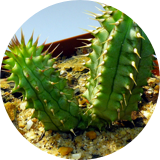


Authentic Hoodia Gordonii
Hoodia is a genus of 13 species in the flowering plant family Apocynaceae, under the subfamily Asclepiadoideae. They are stem succulents...
read more.
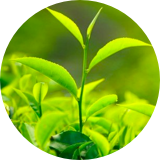
Green Tea Leaf Extract
Green tea is tea made solely with the leaves of Camellia sinensis that have undergone minimal oxidation during processing. Green tea...
read more.
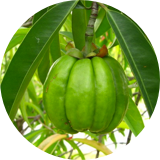
Garcinia Cambogia
Garcinia Cambogia is a natural form of Hydroxycitric Acid (HCA) which can inhibit Citrate Lyase (an enzyme in cells). Citrate Lyase...
read more.
Authentic Resveratrol
Resveratrol is a phytoalexin produced by plants with its highest concentration in grape skins and red wines. This nutrient is working to boost...
read more.
Caralluma Fimbriata
Caralluma fimbriata is a succulent plant in the family Apocynaceae. It has been eaten in rural India for centuries, raw, as a vegetable with...
read more.
Coix Seed
Coixseed (also known as Job's Tears) is a tall grain-bearing tropical plant of the family Poaceae (grass family) native to East Asia and...
read more.
Raspberry Ketone
Raspberry Ketone is an enzyme obtained from red raspberries. This is what gives the berries their sweet smell. Research has shown their...
read more.
Green Tea Leaf Extract
Green tea is tea made solely with the leaves of Camellia sinensis that have undergone minimal oxidation during processing. Green tea...
read more.
Garcinia Cambogia
Garcinia Cambogia is a natural form of Hydroxycitric Acid (HCA) which can inhibit Citrate Lyase (an enzyme in cells). Citrate Lyase...
read more.
Lotus Leaf
Lotus Leaf, better known as the Water Lily, is considered sacred in Asian religions for its ability to stay dry and clean. When water...
read more.
Chromium
Chromium has been touted a miracle mineral, one advertised to have myriad effects including weight loss, mood enhancement, energy...
read more.
Saffron
Satiereal saffron extract has been referred to as a “miracle appetite suppressant” and a recent study conducted by Biomedical and Global...
read more.
Green Coffee Bean
They key ingredient in the green coffee bean is a very important natural active compound called chlorogenic acid. Chlorogenic acid works by inhibiting the release of glucose in the body,
while at the same time boosting the metabolism or the “burning” of fat in the liver. These two mechanisms work together to inhibit the absorption of fat and eliminate weight gain.
Saffron
Satiereal saffron extract has been referred to as a “miracle appetite suppressant” and a recent study conducted by Biomedical and Global Clinical Solutions titled, Satiereal,
a Crocus sativus L extract, reduces snacking and increases satiety in a randomized placebo-controlled study of mildly overweight, healthy women showed promising results.
Hoodia Gordonii
Hoodia gordonii is a leafless spiny succulent plant with medicinal uses. It grows naturally in South Africa and Namibia. Hoodia gordonii was discovered and painted by Col. Robert Jacob Gordon
in the vicinity of the Orange River in about 1779, and identified as a Stapelia, a closely related genus.
The use of Hoodia has long been known by the indigenous populations of Southern Africa, who infrequently use these plants for treating indigestion and small infections. However, it is their
centuries old use of the meat of the plant to suppress appetite when making long hunting trips in the Kalahari Desert that has stimulated the most interest.
In 1977, the South African Council for Scientific and Industrial Research (CSIR) isolated the ingredient in Hoodia—now known as P57—which is responsible for its appetite-suppressant effect,
and patented it in 1996. The CSIR then granted United Kingdom-based Phytopharm a license, and they collaborated with the pharmaceutical company Pfizer to isolate active ingredients from the
extracts and look into synthesizing them for use as an appetite suppressant.
Green Tea Leaf Extract
Green tea is tea made solely with the leaves of Camellia sinensis that have undergone minimal oxidation during processing. Green tea originates from China and has become associated with many
cultures in Asia from Japan and South Korea to the Middle East. Recently, it has become more widespread in the West, where black tea is traditionally consumed. Many varieties of green tea have
been created in countries where it is grown. These varieties can differ substantially due to variable growing conditions, processing, and harvesting time.
Over the last few decades green tea has been subjected to many scientific and medical studies to determine the extent of its long-purported health benefits, with some evidence suggesting that
regular green tea drinkers have lower chances of heart disease and developing certain types of cancer. Green tea extract rich in polyphenols and caffeine has been shown to be useful for "weight
management", since it induces thermogenesis and stimulates fat oxidation.
Resveratrol
Harvard researchers may have found a way to counter the negative effects of a high-calorie diet loaded with trans fats. And it's done using one of natures finest products - grapes.
This flavonoid (resveratrol) found in red grape skins, may soon become one of the most prized molecules on earth. It is so tiny that it penetrates the wall of almost any cell in an organism.
It continues into the cell nucleus, to the cell's genetic machinery. There, resveratrol selectively switches on genes that aid the survival of an organism.
HOW IT WORKS: Mitochondria are the little furnaces inside the nucleus of your cells that burn nutrients and fats into energy. Unfortunately, as we age, our mitochondria begin to deteriorate
and our metabolism begins to slow. The good news is that resveratrol increases mitochondria production.
Resveratrol has also proven to be a highly effective antioxidant in regenerating skin cells and slows down or stops the free-radical induced aging of the skin.
Caralluma Fimbriata
Caralluma fimbriata is a succulent plant in the family Apocynaceae. It has been eaten in rural India for centuries, raw, as a vegetable with spices, or preserved in chutneys and pickles,
and is often found as a roadside shrub or boundary marker.
It has been used as a portable food and thirst quencher for hunting. It is also used for its purported ability to suppress hunger and appetite and enhance stamina. It is believed to have an
effect on the appetite control centre of the brain. Tribesmen on a day's hunt will often only pack some Caralluma fimbriata to sustain themselves and hence it is commonly known as "famine food"
in India.
Coix Seed
Job's Tears (Coix lacryma-jobi), Coixseed, adlay, or adlai, is a tall grain-bearing tropical plant of the family Poaceae (grass family) native to East Asia and peninsular Malaysia but elsewhere
cultivated in gardens as an annual. It has been naturalized in the southern United States and the New World tropics. In its native environment it is grown in higher areas where rice and corn
do not grow well. Job's Tears is also commonly, but misleadingly, sold as Chinese pearl barley in Asian supermarkets, despite the fact that C. lacryma-jobi are not of the same genus as barley
(Hordeum vulgare).
Two varieties of the species are grown. Coix lacryma-jobi var. lacryma-jobi has hard shelled pseudocarps which are very hard, pearly white, oval structures used as beads for making rosaries,
necklaces, and other objects. Coix lacryma-jobi var. ma-yuen is harvested as a cereal crop and is used medicinally in parts of Asia. It is also used alongside other herbs in traditional Chinese medicine.
Lotus Leaf
Lotus Leaf, better known as the Water Lily, is considered sacred in Asian religions for its ability to stay dry and clean. When water drops on the leaf, it beads up and rolls off the waxy surface,
washing away dirt. Scientists have worked to mimic its water-repellent, self-cleansing properties. The surface of the Lotus Leaf is not perfectly smooth, but rather porous much like that of a sponge.
The air trapped in the crevices prevents water from adhering to the solid.